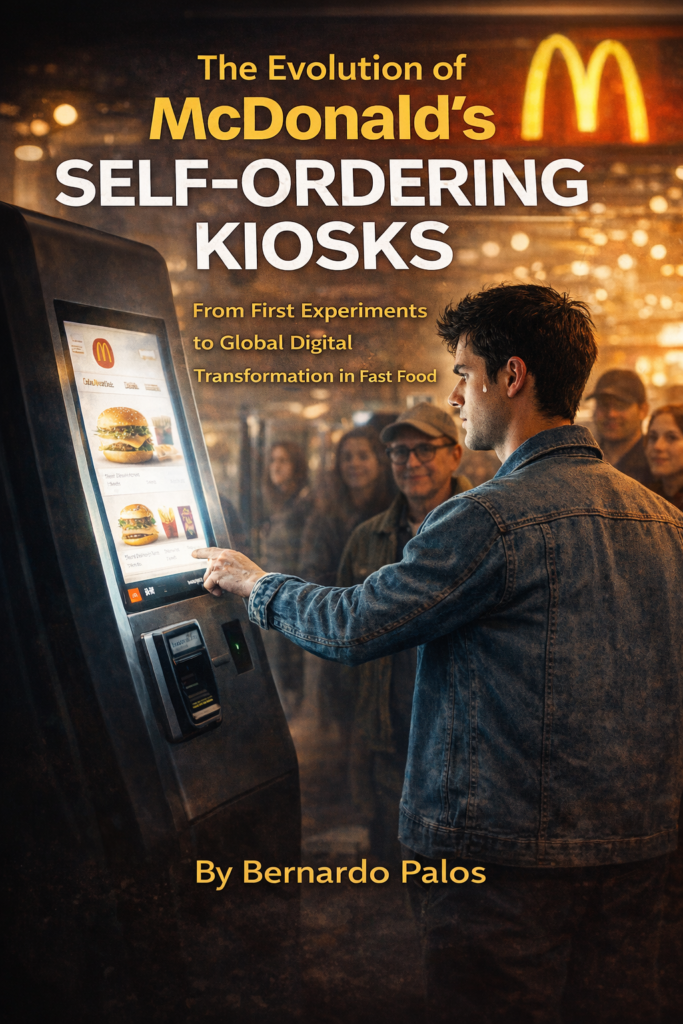
McDonald’s, a global leader in the fast-food industry, has consistently been at the forefront of innovation, particularly in embracing technology to enhance the customer experience. One of the most notable technological advancements the company has introduced in recent years is the self-ordering kiosk. This shift towards digital ordering has transformed the way customers interact with the brand, from how they place their orders to how they experience the in-store environment. The evolution of McDonald’s self-ordering kiosks offers a compelling glimpse into how technology can redefine both the customer journey and operational efficiency within the restaurant sector.
Early Beginnings: McDonald’s Drive-Thru Evolution
Before the advent of self-ordering kiosks, McDonald’s had already revolutionized the fast-food industry with its drive-thru service. The concept of ordering from your car, without stepping foot inside the restaurant, was a game-changer. However, even with this advancement, the in-store experience remained relatively traditional. Customers would walk up to the counter, interact with a cashier, and wait for their order to be prepared.
While the drive-thru expanded, McDonald’s recognized that the in-store experience could benefit from similar automation. This realization led to the development of the self-ordering kiosk.
The Introduction of Self-Ordering Kiosks
McDonald’s first introduced self-ordering kiosks in 2003, but they didn’t make their big debut until much later. The company began experimenting with them in select locations across the United States and Europe as part of a larger plan to modernize their restaurant experience. These kiosks allowed customers to browse the menu, customize their orders, and pay for their meals all at a touch of a screen.
The kiosks marked a significant departure from the traditional method of ordering at the counter. Instead of waiting in line to speak with a cashier, customers could quickly and efficiently place their order through the kiosk. This also allowed for the introduction of more interactive and personalized menu options, which helped cater to the growing demand for customization.
The first version of the kiosk wasn’t as sophisticated as those that would come later, but it set the groundwork for the advancements that followed. In the early stages, the kiosks were relatively basic in design, offering a simple user interface and straightforward menu options. They were still in the experimental phase, and not all McDonald’s locations were equipped with them. However, those that did see the introduction of these machines noticed a positive shift in the way customers interacted with the brand.
Refining the Customer Experience: The Next Generation of Kiosks
By 2015, McDonald’s began expanding the use of self-ordering kiosks across more locations. The company noticed that customers were more willing to customize their orders when they had a digital interface to interact with, as opposed to traditional face-to-face ordering. The kiosks became particularly popular among younger, tech-savvy customers who appreciated the convenience and speed they offered.
These new kiosks also incorporated better design, improving the user interface for a more seamless experience. The screens became larger and more responsive, with clearer menu options and better images of the food being offered. McDonald’s also began integrating loyalty programs, allowing customers to collect points and redeem rewards through the kiosks.
Perhaps the most significant advancement was the introduction of order history and suggestion algorithms. The kiosks began suggesting popular or commonly ordered items based on the customer’s previous selections, enhancing the overall efficiency of the ordering process. This personalization helped McDonald’s cater to repeat customers by offering them a tailored menu experience.
Another important feature added to these kiosks was the ability to split the bill. A family or group of friends dining together could now easily pay for their individual meals, a feature that was particularly popular in high-traffic locations.
Integration with Mobile Technology
As McDonald’s continued to refine the self-ordering kiosk experience, it became clear that mobile technology would play an essential role in the future of fast food. In 2017, McDonald’s began integrating mobile ordering with their kiosks. This allowed customers to place their orders on the McDonald’s app before arriving at the restaurant. The kiosk would then sync with the app to streamline the order process and allow for even faster pickup.
This mobile integration was a significant shift in how McDonald’s customers interacted with their orders. By using the app, customers could bypass the kiosk entirely or simply confirm their order on the screen once they arrived. This integration helped eliminate wait times and reduced the overall friction in the ordering process.
Operational Benefits and Efficiency Gains
While the self-ordering kiosks were initially seen as a way to enhance the customer experience, they also offered significant benefits for McDonald’s operations. The kiosks helped streamline the entire process, reducing the amount of time customers spent at the counter. With fewer staff needed for order-taking, employees were able to focus on other tasks, such as food preparation or customer service.
Additionally, the kiosks helped McDonald’s maintain consistency across its locations. The system could be centrally updated, ensuring that menu items, promotions, and pricing were standardized across all restaurants. This also helped with inventory management, as the kiosks were able to track orders in real-time, making it easier to monitor stock levels and adjust accordingly.
From a financial perspective, the kiosks improved revenue by increasing the average order size. Research indicated that customers tended to spend more when ordering through the kiosk because of the ease of customizing their meals and the greater visibility of the full menu. McDonald’s reported that self-ordering kiosks led to an increase in sales and helped boost profit margins.
Expanding into Delivery and Cloud Kitchens
The introduction of self-ordering kiosks also laid the foundation for McDonald’s entry into the digital delivery space. In partnership with delivery services such as Uber Eats, DoorDash, and Grubhub, McDonald’s began offering delivery through both their app and third-party platforms. The integration of kiosks with these services helped McDonald’s streamline the order-to-delivery process, enabling customers to place orders in-store or from home with ease.
In addition, McDonald’s has begun experimenting with “ghost kitchens,” which are delivery-only locations that don’t require a traditional dine-in experience. The technology behind self-ordering kiosks is crucial to the success of these operations, allowing for faster order processing and smoother integration with delivery apps.
The Future of McDonald’s Self-Ordering Kiosks
Looking ahead, McDonald’s continues to innovate in the realm of self-ordering kiosks. The company is exploring the integration of artificial intelligence (AI) to enhance the customer experience even further. AI could help optimize menu suggestions based on real-time data, improving accuracy and speed. The kiosks may also become even more personalized, incorporating voice recognition and facial recognition technologies to identify customers and tailor their experiences.
Additionally, McDonald’s is investigating the use of automation in food preparation. With kiosks taking over the ordering process and AI managing the flow of customer data, it’s possible that the next step in the evolution of McDonald’s could involve fully automated kitchens, where food is prepared and delivered with minimal human intervention.
Conclusion
The evolution of McDonald’s self-ordering kiosks highlights the company’s commitment to using technology to enhance both the customer experience and operational efficiency. From the early experiments in the early 2000s to the sophisticated kiosks in place today, McDonald’s has proven its ability to adapt and lead in the fast-food industry. As technology continues to advance, it is likely that McDonald’s self-ordering kiosks will evolve even further, embracing new innovations such as AI, automation, and mobile integration to shape the future of fast food.